
Proper drainage is essential for protecting your home’s foundation, landscaping, and overall property health. One of the most effective drainage solutions homeowners rely on is the French drain. But how exactly do French drains work, and why are they so effective at managing water problems?
At Rock Famous Foundation Repair, we specialize in drainage solutions across Oklahoma, including expert French drain installation that protects homes from water damage. In this comprehensive guide, we’ll explain how French drains function, their components, where and why to use them, and how they benefit your property long-term.
What Is a French Drain?
A French drain is a trench filled with gravel or rock containing a perforated pipe that redirects surface water and groundwater away from an area. Named after Henry Flagg French, who popularized the concept in the 19th century, this system is designed to alleviate water buildup and prevent soil saturation.
French drains are commonly used to:
- Manage excess water around foundations
- Prevent yard flooding and pooling
- Protect landscaping and gardens
- Divert water away from septic fields or drainage basins
How Does a French Drain Work?
The fundamental principle behind a French drain is simple: collect water from wet areas and redirect it to a safe discharge point where it won’t damage your home or yard.
Here’s the process step-by-step:
1. Water Collection
Water naturally flows downhill and seeks the path of least resistance. When rainwater or groundwater accumulates near your home or in a low spot, it can pool and saturate the soil.
The gravel-filled trench around the problem area acts like a sponge, allowing water to seep through easily. The perforated pipe buried within this gravel then collects the water.
2. Water Channeling
Once inside the perforated pipe, the water is channeled along the pipe’s length. The pipe is installed with a slight slope so gravity helps carry the water away.
3. Safe Discharge
At the end of the pipe, water exits at a lower elevation, often draining into a dry well, storm sewer, drainage ditch, or away from your home’s foundation. This prevents water from pooling and reduces hydrostatic pressure on your foundation walls.
Components of a French Drain System
Understanding the components helps explain why French drains are so effective:
- Trench: Dug to direct water flow and house the pipe and gravel.
- Gravel or Rock Fill: Surrounds the perforated pipe to allow water to flow freely into it and prevent soil from clogging the pipe.
- Perforated Pipe: Collects and transports water. The holes let water enter from the surrounding gravel.
- Landscape Fabric: Often placed over the gravel to prevent dirt and debris from entering the trench and clogging the pipe.
- Outlet or Discharge Point: The place where water safely exits the system.
Where Should You Install a French Drain?
French drains are versatile and can be installed in various locations to solve specific drainage problems:
Near Foundations
One of the most common uses is around a home’s foundation to prevent water from pooling and causing damage. By diverting water away, French drains reduce the risk of basement flooding, foundation cracks, and structural issues.
In Low Spots or Yard Depressions
If your yard has areas where water collects and doesn’t drain well, a French drain can redirect that water to prevent soggy grass and muddy patches.
Around Driveways and Walkways
Water pooling on paved surfaces can cause damage or safety hazards. French drains help channel water away, protecting concrete or asphalt surfaces.
Near Septic Systems or Drain Fields
Proper drainage protects septic systems from oversaturation, which can lead to failure.
Benefits of Installing a French Drain
1. Protects Your Foundation
By redirecting water away from your home’s base, French drains reduce hydrostatic pressure that can cause cracks, leaks, or settling.
2. Prevents Flooding and Water Damage
French drains mitigate standing water in yards, basements, and crawl spaces, helping avoid costly water damage.
3. Preserves Landscaping
Water pooling can kill plants, erode soil, and create mud. French drains keep your yard healthy and attractive.
4. Low Maintenance
Once installed correctly, French drains require minimal upkeep. Proper design and components prevent clogging and maintain drainage efficiency.
5. Increases Property Value
Good drainage is a key feature buyers look for. Installing a French drain shows you’re proactive about protecting your investment.
Types of French Drains
There are several types, each suited for different needs:
- Surface French Drain: Installed at ground level to intercept runoff water.
- Subsurface French Drain: Buried below grade to manage groundwater and prevent saturation.
- Trench Drain: A wider, shallow trench with a grate on top, common in driveways or patios.
Installation Process Overview
Professional installation ensures your French drain functions effectively and lasts.
Step 1: Site Assessment
Determine where water accumulates and identify the best drainage path.
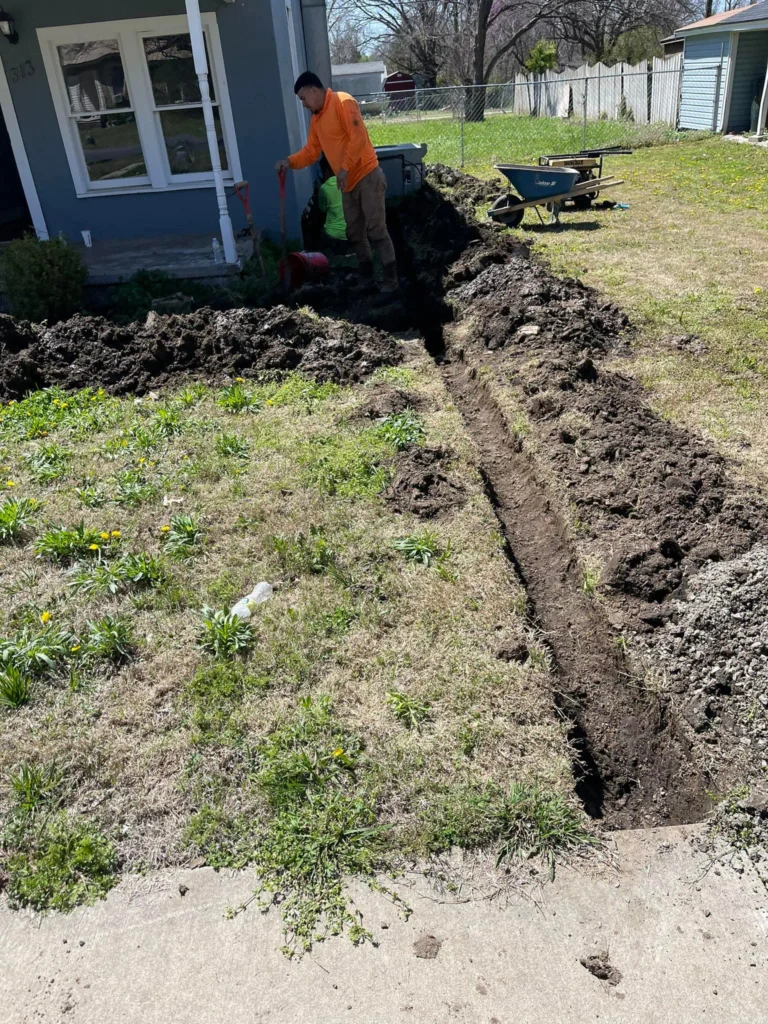
Step 2: Digging the Trench
The trench should slope downward at about 1% grade (1 foot drop per 100 feet) to ensure water flow.
Step 3: Lining with Fabric
Landscape fabric is placed to prevent soil infiltration.
Step 4: Adding Gravel and Pipe
A layer of gravel is laid, then the perforated pipe is positioned, and the trench is backfilled with gravel.
Step 5: Covering
The trench is covered with fabric and soil or decorative rock.
Common Maintenance Tips
- Inspect outlets regularly to ensure water flows freely.
- Keep discharge points clear of debris.
- If the system slows or clogs, professional cleaning may be necessary.
- Avoid planting deep-rooted plants near the drain to prevent root intrusion.
When to Call the Experts
If you experience recurring water pooling, basement dampness, or suspect drainage issues, it’s time to call professionals like Rock Famous Foundation Repair. We offer thorough assessments and expert French drain installation customized for your property.
Final Thoughts
French drains are a proven, effective solution to water problems that threaten homes and yards. Understanding how they work helps homeowners make smart decisions to protect their property.
If you’re facing drainage issues in Tulsa, Broken Arrow, Owasso, or surrounding Oklahoma areas, contact Rock Famous Foundation Repair for a free consultation. We’ll design and install a French drain system that keeps your home dry and secure for years to come.
